
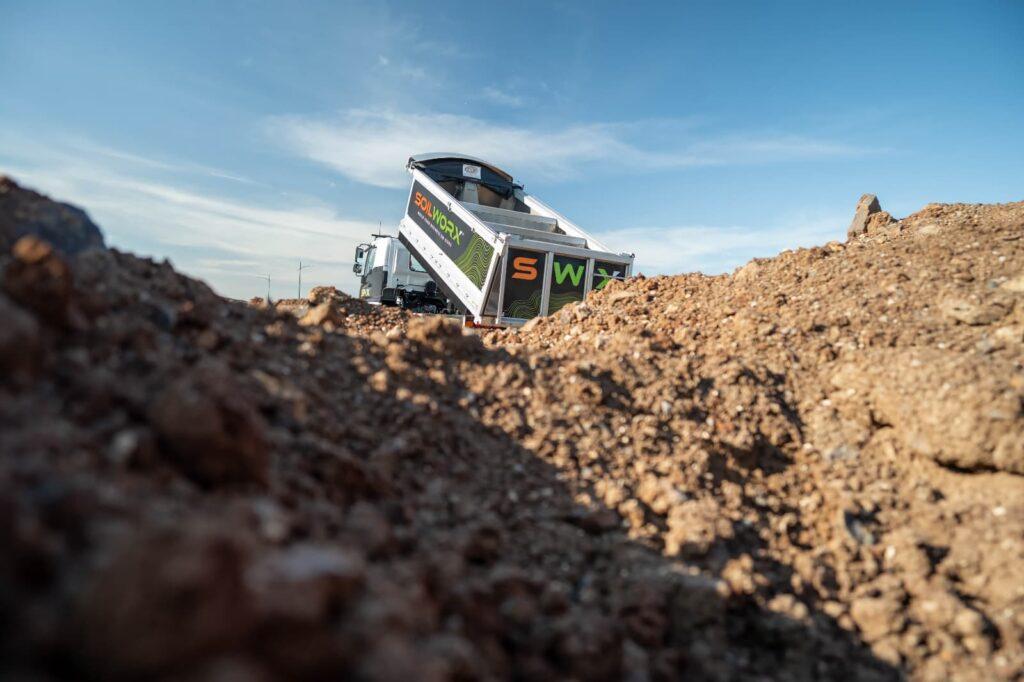
The soil under a garden bed and the stone on top of it do very different jobs. Getting both right starts with planning them together.
Spring is when gardens get built. New beds go in, tired ones are dug over, and bare patches are finally covered before summer.
Most projects need two very different materials. Soil feeds the plants, and stone or mulch protects the surface. Each needs to suit the other, and the site.
Soilworx, which has supplied sands, soils, gravels, mulches and pebbles across Victoria for almost 40 years, sells both from its yards in Deer Park, Pakenham and Werribee. Its installation advice starts below the surface, with drainage and soil, before any stone goes down.
Start with what is underneath
Soilworx’s first rule is to sort out drainage before anything goes on top. In Melbourne’s west, the basalt plain soils around suburbs such as Deer Park and Werribee are heavy clay that drains slowly. A layer of stone over unimproved clay does not fix that; it holds water against plant roots through winter.
That is where the right soil comes in. Soilworx sells its garden soils under the EcoActiv brand, with different blends for different jobs:
|
Soil |
Best for |
Price per cubic metre |
|---|---|---|
|
Garden Soil |
General beds for trees, shrubs and plants |
$78 |
|
Lawn Mix |
A fine grain blend with good drainage and stability under lawns |
$75 |
|
Mushroom Compost |
Part of the soil improver and compost range |
$69 |
|
Organic Soil Improver |
Part of the soil improver and compost range |
$65 |
Prices were checked on the Soilworx website on 7 October 2026 and exclude delivery. All four also come in 25 litre bags.
Then choose what goes on top
Once the soil is right, the surface can do its job. Soilworx recommends garden stones for permanent plantings, natives, succulents, driveway borders and paths, and organic mulch for vegetable gardens, annual beds and new plantings that need help establishing. Plenty of gardens use both: stone at the front, mulch in the productive beds out the back.
Size and shape matter. Rounded pebbles suit garden beds and water features, while angular crushed stone locks together and suits paths and slopes. Soilworx calls 20mm the workhorse size for most garden beds, laid about 50mm deep over woven geotextile weed mat.
Why buying close to home helps
A search for gardening soil near me usually turns up plenty of options. Buying from a yard close to home has a few practical advantages.
First, you can see what you are buying. Soilworx encourages customers to look at stone in person before ordering, because colour reads differently in the sun and next to real paving than it does on a screen.
Second, a nearby yard gives you a choice between collecting and delivery. Soilworx customers can collect from any of its three yards, or book delivery across Victoria with GPS tracking and an SMS when the truck is on its way.
Third, it makes bags versus bulk a real choice. Soilworx notes that bags suit small jobs and tight storage, while bulk is usually cheaper per unit on larger projects because you are not paying for packaging.
Its 25 litre bags of garden soil cost $11.95 each, or $11.20 each for five or more, against $78 for a cubic metre in bulk.
Order once, order right
The simplest way to avoid a second delivery is to measure properly. Volume is length times width times depth. Soilworx suggests adding about 10% for stone, to allow for uneven ground and curved edges, and offers a free volume calculator on its website for both soil and stone.
Sort the drainage and soil first, choose stone that suits the site, and see the stone before it arrives. Those are the steps Soilworx’s own guidance points to for a garden bed that stays tidy for years.