
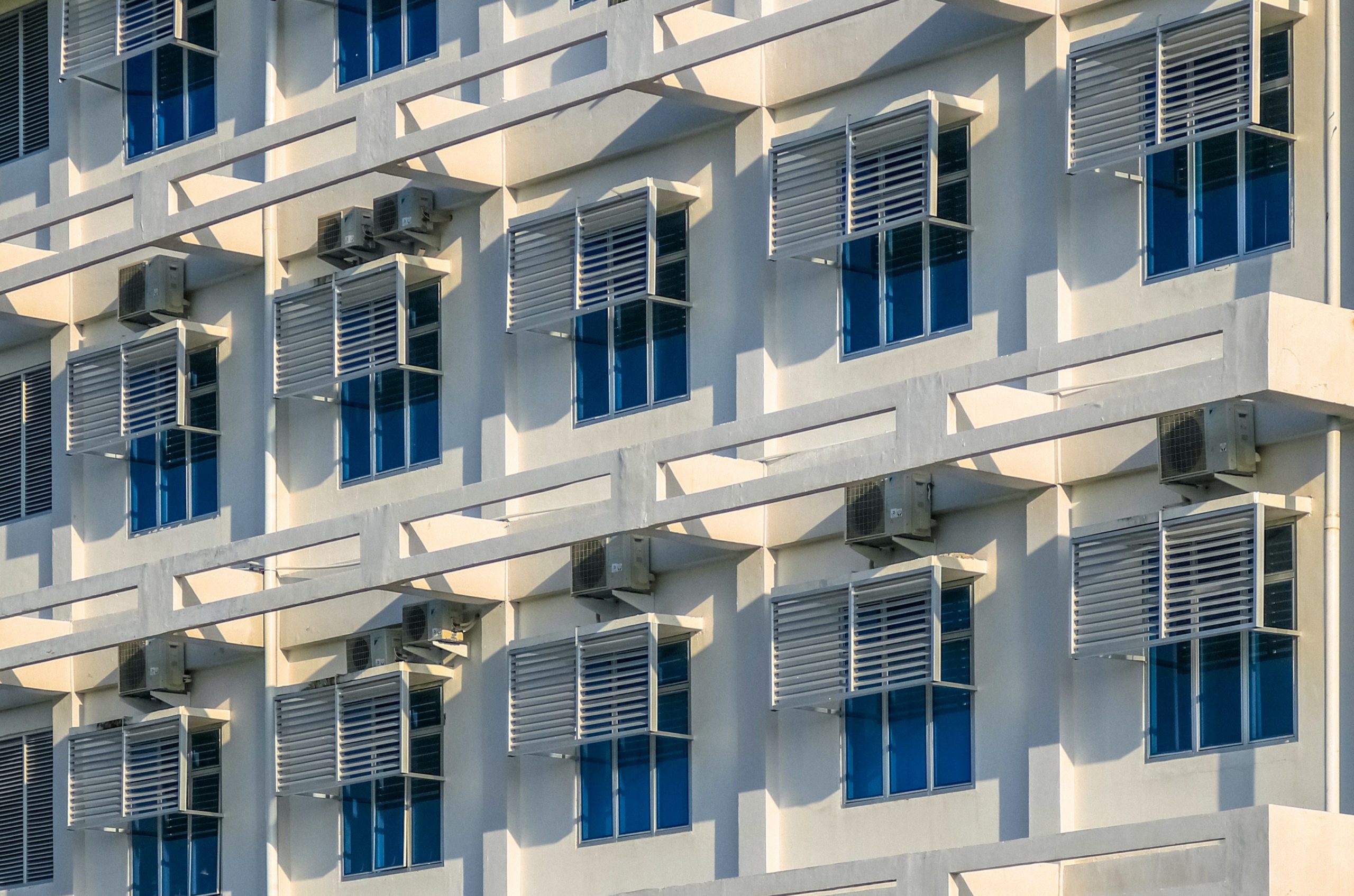
Uneven airflow in apartment buildings can make some rooms feel hot, cold, stuffy, drafty, or uncomfortable even when the HVAC system is running.
Because multifamily properties have shared spaces, ductwork, pressure differences, and ventilation systems, these issues are often more complex than they appear.
In many cases, a commercial HVAC inspection can help identify whether the problem is caused by duct leaks, poor balancing, blocked vents, exhaust issues, or building-wide pressure problems.
Signs Of Uneven Airflow In Apartment
Uneven airflow in an apartment building means air is not being delivered, returned, exhausted, or circulated consistently throughout the building.
The building is not moving air in a controlled, predictable way. Some spaces receive too much conditioned air, some receive too little, and some may be getting air from places they should not be getting it from at all.
In simple terms, the HVAC system is moving air, but it is not moving it evenly where it is needed.
One apartment may feel stuffy while another feels drafty. One bedroom may stay warm while the living room cools down quickly. A top-floor unit may get weak airflow, while a lower-floor unit receives too much air.
The living room may reach the thermostat setting, but the back bedroom never does. A vent may blow strongly in one room and barely move a tissue in another.
Residents usually notice uneven airflow before they know what is causing it, and they describe it in everyday terms.
Common signs include rooms that never reach the thermostat setting, weak air coming from certain vents, doors that slam, whistle, or are hard to open because of pressure differences, musty odors that linger, windows that fog, condensation on windows, cooking smells traveling between units, odors from smoke, trash rooms, garages, or neighboring units, and hallways that feel warmer, colder, more humid, or dramatically different from the apartments themselves.
Uneven airflow can also show up as comfort complaints that seem unrelated at first. For example, one resident may say their bedroom is always hot at night, while another complains about cold drafts near the entry door.
Both issues may point to the same root problem: air is not being properly balanced across the building.
That is what makes apartment airflow problems tricky: they do not always look like an “airflow” issue at first. They often show up as comfort complaints, odor complaints, humidity complaints, dust complaints, or energy bill complaints.
A good way to think about it is this: in an apartment building, air is always moving. The real question is whether it is moving through the pathways the HVAC system intended, or through cracks, shafts, corridors, chases, doors, and duct leaks the building accidentally created.
This is why the problem has to be viewed as a whole-building issue, not just a room-by-room comfort complaint.
Common Airflow In Apartment Issues
Airflow is harder to control in apartment buildings because there are more spaces, more pressure zones, more duct runs, and more people using the building differently at the same time.
The HVAC system is not only serving rooms. It is interacting with an entire building full of pressure zones. That is why air circulation in apartment buildings often depends on ducts, exhaust, make-up air, and resident behavior all working together.
A single-family home usually has one HVAC system serving one household, one owner, one envelope, one set of duct runs, and one main comfort goal. By comparison, apartment building HVAC systems have to account for multiple units, shared spaces, and changing pressure conditions at the same time.
An apartment building may have individual unit systems, shared corridors, central exhaust, rooftop equipment, make-up air systems, stairwells, elevators, trash rooms, laundry rooms, garages, mechanical rooms, and dozens or hundreds of doors opening and closing throughout the day.
Apartment buildings also experience stronger pressure effects. Warm air naturally rises through elevator shafts, stairwells, chases, and gaps in the building because of stack effect.
Wind can push air into one side of the building and pull it out of another. Exhaust fans in bathrooms, kitchens, laundry rooms, and mechanical rooms can create negative pressure if the building does not have enough replacement air.
Every exhaust fan, open window, closed bedroom door, leaky shaft, and hallway pressure difference can affect where air goes.
Another challenge is that apartments are connected, even when they feel separate. Air can move through wall cavities, pipe penetrations, shared duct shafts, corridor doors, electrical openings, and poorly sealed chases.
That means airflow problems in one area can affect another unit, room, or floor. In a single-family home, the system is usually easier to diagnose because the boundaries are simpler.
In a multifamily building, the “system” includes the HVAC equipment, the ductwork, the building envelope, common areas, exhaust systems, and resident behavior.
This is why apartment airflow problems are rarely solved by simply adjusting a thermostat. The thermostat only measures one small point in one space.
The real issue may be pressure, duct leakage, poor return paths, corridor ventilation, exhaust imbalance, or uncontrolled air movement between floors.
In multifamily buildings, comfort is not just about temperature. It is about controlling pressure, pathways, ventilation, filtration, and air distribution at the same time.
This also affects air quality in apartment buildings because pollutants and odors follow the same pressure pathways as conditioned air.
How Apartment Building HVAC Systems Affect Airflow
Apartment HVAC systems affect airflow by creating pressure differences. In larger properties, apartment building HVAC systems have to manage these pressure differences across units, corridors, shafts, and shared mechanical areas.
Air always moves from areas of higher pressure to areas of lower pressure, and it will take any available route to get there. When supply air, return air, and exhaust air are not balanced, the building starts using unintended pathways to move air.
For example, if a unit has strong bathroom or kitchen exhaust but not enough supply or make-up air, that air has to be replaced. Ideally, replacement air comes from a designed ventilation system.
But if the building is not balanced, it may pull air from the hallway, neighboring units, wall cavities, plumbing chases, garages, or trash rooms.
That is how one apartment’s airflow problem can become another resident’s odor problem.
If a corridor make-up air system supplies too much air, it may push hallway air into apartments. If a top-floor exhaust shaft pulls harder than the lower floors, upper units may experience stronger drafts, odor transfer, or faster heat loss.
Floors also behave differently. Upper floors may be affected by rising warm air and stronger stack effect. Lower floors may experience different pressure from entrances, garages, or make-up air systems.
Middle floors may seem more stable until fans, doors, or weather conditions shift the pressure balance.
The type of HVAC system matters as well. Individual apartment systems may give residents more control inside their own unit, but they still interact with central exhaust and hallway ventilation.
Central systems can be efficient, but they must be carefully balanced so that air is distributed fairly across floors and zones. This is one reason HVAC systems for apartment buildings need careful design, testing, and balancing after installation.
Shared systems can make this even more complex. A central exhaust system may pull harder from one floor than another. A make-up air unit may over-pressurize corridors.
A rooftop unit may serve some branches better than others. Shared duct systems, poorly sealed shafts, unbalanced fans, and poorly sealed shafts can allow air, odors, moisture, and pollutants to move from one part of the building to another or bypass intended routes.
This is why airflow issues in apartments should not be treated as isolated room-by-room complaints. Air movement in apartment buildings is connected.
A weak vent in one apartment may be connected to duct leakage in a shaft, a dirty coil, an undersized return path, a blocked damper, a pressure problem in the corridor, or an exhaust imbalance several floors away.
A weak vent in one unit, a smoky smell in another, and a drafty hallway door may all be symptoms of the same building-wide imbalance.
The Role Of Ducts In Apartment Buildings
Ducts are the roadways that move conditioned air, return air, exhaust air, and ventilation air through an apartment building. In many cases, ducts in apartment buildings determine whether the air produced by the system reaches the right room, unit, or floor.
They decide whether the air paid for by the HVAC system actually reaches the people who need it. When ducts are properly designed, sealed, sized, insulated, and balanced, air can reach the right spaces at the right volume.
When ducts are poorly designed or deteriorated, the HVAC system may run constantly and still fail to deliver comfort.
In an ideal system, ducts deliver a measured amount of air to each room or unit and carry return, exhaust, or ventilation air back through the correct pathways.
In a real apartment building, ducts may be long, hidden, aging, squeezed into tight ceiling spaces, routed through vertical shafts, interrupted by fire-rated assemblies, altered during renovations, and connected through branches, elbows, dampers, and shared mechanical spaces.
Every turn, restriction, leak, and transition affects how much air reaches the final room or unit.
Duct problems can create several types of uneven airflow. A long duct run or a branch with too many bends may serve a distant bedroom poorly.
A leaky riser may lose air before it reaches upper floors. A crushed flex duct may starve one room of supply air. A loose connection inside a ceiling can dump conditioned air into a cavity instead of the living space.
An unsealed or leaky return path may pull dusty or humid air from hidden areas instead of the apartment.
A poorly sealed exhaust duct can allow odors to spread. A poorly adjusted balancing damper or unbalanced riser may send too much air to one branch or lower floor and too little to another branch or upper floor.
Ducts do not just move air. They also shape pressure. Because ducts in apartment buildings often run through ceilings, shafts, and shared spaces, even small leaks or restrictions can affect several areas at once.
When ductwork is poorly designed, leaking, restricted, or unbalanced, the building starts borrowing air from unintended places. That is when residents begin noticing drafts, smells, stale rooms, and uneven temperatures.
Ducts are often hidden, which makes them easy to ignore. But ducts in apartment buildings should be inspected when airflow complaints repeat across the same floor, stack, or building wing.
But in many apartment buildings, the duct system is the invisible cause of visible complaints and the difference between “the HVAC equipment works” and “the residents are actually comfortable.”
Poor Air Circulation In Apartment Buildings
Poor duct design reduces circulation by making it difficult for air to move efficiently. When air circulation in apartment buildings depends on long or restricted duct paths, comfort problems can appear even when the equipment is running.
Air does not like long, twisted, restricted pathways. If ducts are undersized, too long, poorly routed, sharply bent, crushed, full of restrictive fittings, or poorly transitioned, the HVAC fan has to work harder to move air.
Even then, some rooms or units may receive weak airflow. Oversized or poorly planned ducts can also create problems, including low air velocity, poor mixing, and inconsistent delivery.
Blocked vents create a similar problem at the room level and are one of the simplest but most common airflow issues.
Furniture, rugs, curtains, storage boxes, dust buildup, closed registers, painted-over grilles, or a couch over a supply register can restrict air at the point of delivery.
When air cannot enter or leave a room properly, that room may feel stuffy, hot, cold, or humid. The HVAC equipment may be working, but the room is not receiving or returning enough air.
Duct leaks are more serious because they waste air before it reaches the intended space. Leaks can also reduce delivered air to units far from the equipment, especially when the system has long runs or shared risers.
Supply leaks can dump conditioned air into ceilings, shafts, attics, crawl spaces, or wall cavities instead of the apartment. Return leaks can pull in dusty, humid, or contaminated air from hidden spaces.
Exhaust duct leaks can spread moisture and odors where they do not belong. In multifamily buildings, duct leakage can also contribute to odor transfer, pressure imbalance, higher energy bills, and poor indoor air quality.
Aging ductwork can reduce circulation in several ways. Seams loosen, insulation deteriorates, dampers get stuck, flexible ducts sag, internal liners collect dust, and older ducts may no longer match the building’s current HVAC equipment, occupancy needs, or current use.
Many apartment buildings have been renovated over time, but the duct system may still reflect old floor plans, old equipment, or old ventilation assumptions.
Over time, a duct system that once performed adequately can become one of the main causes of comfort complaints. It can also reduce air circulation in apartment buildings by sending air into hidden cavities instead of occupied rooms.
The result is often a system that looks operational but performs unevenly. Air is moving somewhere, just not necessarily where the residents need it.
How To Size Ductwork For Apartment Buildings
Ductwork for apartment buildings should be sized by a qualified HVAC designer or mechanical engineer, not guessed from the size of the equipment, copied from another building, or based on rules of thumb.
Correct sizing is especially important for HVAC systems for apartment buildings because one undersized branch can affect several rooms or units.
The goal is not to install the biggest ducts that fit. The goal is to deliver the correct amount of air to each space without excessive noise, pressure loss, energy waste, or imbalance.
Proper duct sizing starts with load calculations, airflow requirements, equipment capacity, ventilation needs, building layout, duct length, available static pressure, and code requirements.
These calculations help improve delivered airflow without creating excessive noise, pressure loss, or imbalance.
A proper duct sizing process starts with room-by-room or zone-by-zone load calculations. Different rooms, apartments, exposures, and floors need different amounts of airflow depending on square footage, window exposure, insulation, occupancy, floor level, and heat gain.
A sunny top-floor corner unit does not behave the same way as a shaded middle-floor unit. Next, the designer determines the required airflow, usually measured in cubic feet per minute, or CFM.
Each room or zone needs enough supply air to meet the heating and cooling load, and the system also needs adequate return or transfer air so air can circulate back without creating pressure problems.
If air is supplied to a room but cannot easily get back to the system, that room can become pressurized, uncomfortable, or poorly circulated.
Then the designer accounts for ventilation and exhaust requirements. Apartment buildings must handle fresh air, bathroom exhaust, kitchen exhaust, corridor air, corridor ventilation, laundry exhaust, and sometimes central make-up air, garage exhaust, or laundry exhaust.
These systems affect pressure and airflow throughout the building, so they cannot be designed separately in isolation.
After that, the duct layout is designed to minimize unnecessary resistance. Good layouts help maintain air delivery in areas that are far from the equipment or located at the end of a long branch.
Long runs, tight bends, undersized branches, excessive elbows, restrictive dampers, poor transitions, and fittings increase static pressure and reduce delivered airflow.
Ducts should be sized based on friction rate, velocity, available fan pressure, duct length, fittings, noise control, and balancing. The goal is to move the right amount of air quietly, efficiently, and consistently.
The best duct designs also include balancing dampers, access points, sealing details, and testing requirements, with access for testing, balancing, cleaning, and maintenance.
Even a well-sized duct system can perform poorly if it is not sealed, measured, and balanced after installation. A design that cannot be measured in the field is difficult to verify later.
For residential-style apartment systems, designers often reference ACCA Manual D principles. For larger multifamily or mixed-use buildings, engineers may also apply commercial HVAC design methods and ventilation standards. The key point is that duct sizing should be calculated, documented, and verified in the field.
For apartment buildings, a correct design considers not just equipment capacity, but the way air will move through units, corridors, shafts, exhaust systems, and pressure boundaries.
Uneven Airflow And Air Quality In Apartment Buildings
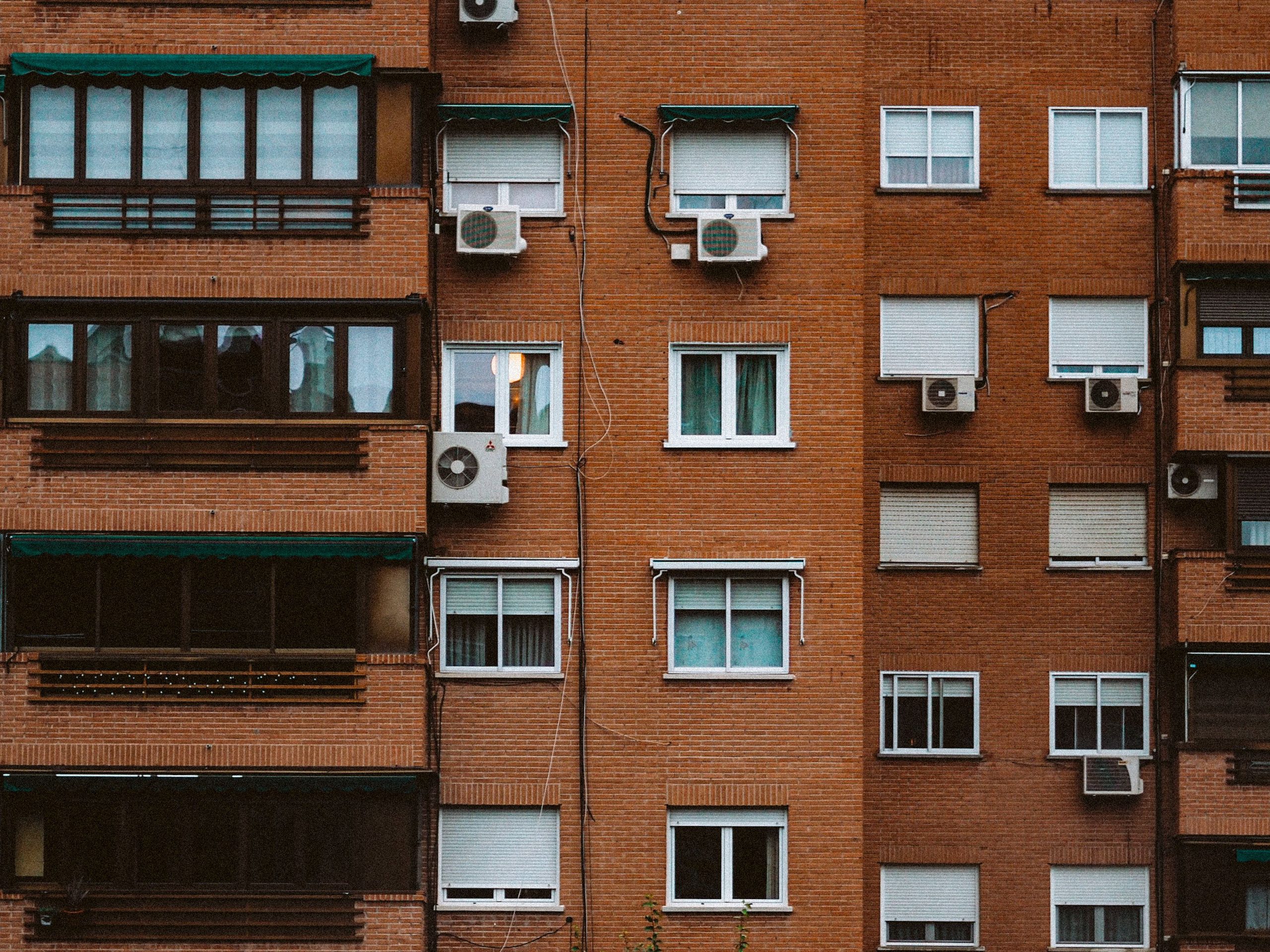
Uneven airflow can directly affect indoor air quality because air movement controls how pollutants, moisture, odors, and fresh air travel through the building.
This is why air quality in apartment buildings depends heavily on balanced ventilation, exhaust, filtration, and pressure control. Air distribution controls what gets diluted, what gets exhausted, what gets filtered, and what gets trapped.
When airflow is weak, stale air can linger. Poor room airflow can allow odors, humidity, and particles to stay in occupied spaces longer than intended.
Cooking particles, cleaning product vapors, humidity, pet dander, dust, smoke, and odors may remain in the apartment longer than they should. Rooms with poor circulation can feel stale even when the HVAC system is running.
Poor airflow can allow humidity to build up in bathrooms, kitchens, closets, bedrooms, and laundry areas. High humidity can contribute to musty odors, condensation, dust mite activity, and mold risk.
Bathrooms, kitchens, and laundry areas need dependable exhaust and replacement air. Weak exhaust can leave cooking odors, cleaning chemical vapors, smoke, and moisture inside the unit longer than intended.
Uneven airflow can also increase cross-contamination between spaces. This can make air quality in apartment buildings worse when air is pulled from garages, trash rooms, corridors, or neighboring units.
If an apartment is under negative pressure, it may pull air from corridors, neighboring units, trash rooms, garages, crawl spaces, mechanical spaces, wall cavities, or other hidden spaces.
That air may carry odors, particles, allergens, smoke, or other contaminants. If hallways or common areas are over-pressurized, they may push air into apartments instead of keeping units properly separated.
Another issue is filtration. Air has to pass through the filter for the filter to help. If return air is not moving correctly through the HVAC system, air may bypass filters or fail to circulate enough for filtration to be effective.
If duct leaks, poor returns, or pressure problems cause air to bypass the intended path, filtration becomes less effective. Residents may then notice more dust, allergy symptoms, stale air, or persistent odors even when the system is running.
In short, uneven airflow is not just a comfort issue. It is also one of the reasons air quality in apartment buildings should be evaluated along with comfort and energy performance.
It can become a building health issue because ventilation, filtration, humidity control, and pollutant removal all depend on predictable air movement.
In apartment buildings, airflow problems can influence odor transfer, moisture control, pollutant movement, dust levels, and the overall health of the indoor environment.
How To Increase Airflow In Apartment
Residents can take a few simple steps to improve airflow in apartment spaces, but they should avoid anything that could damage the HVAC system or affect other units.
They can start with the basics, but they should also know when the issue is bigger than the unit.
Start by making sure supply and return vents are open, clean, and unobstructed. This is one of the easiest ways to improve airflow in apartment rooms before assuming there is a larger mechanical problem.
Move furniture, rugs, curtains, storage bins, and other items away from vents. Vacuum grilles gently to remove dust buildup. A blocked vent can make a room uncomfortable even when the HVAC system is working.
If the apartment has a replaceable HVAC filter, change it on the schedule recommended by the building or equipment manufacturer. A clogged or dirty filter can restrict airflow, make the system work harder, and cause it to run longer with weaker results.
Keep interior doors open when possible, especially if rooms do not have dedicated return vents. Keeping return paths open can improve airflow in apartment bedrooms and reduce pressure differences between rooms.
Closed doors can trap air, interrupt circulation, and create pressure differences. If a room only feels comfortable with the door open, that may be a clue that the apartment needs a transfer grille, jumper duct, door undercut, or return-air improvement, but those should be handled by building maintenance or an HVAC professional.
Use bathroom and kitchen exhaust fans when cooking, showering, or cleaning. Bathroom fans help remove shower moisture. Kitchen exhaust helps remove heat, odors, and cooking pollutants.
However, strong exhaust without enough make-up air can sometimes create drafts or pull air from unwanted places, so persistent odor or pressure issues should be reported.
If the apartment feels stuffy, brief window ventilation may help when outdoor conditions are good, but windows are not a substitute for a properly functioning HVAC or ventilation system.
Residents should also look for patterns. Does the problem happen only on windy days? Only when neighbors cook? Only when the bathroom fan runs? Only in one bedroom? Only on upper floors? These details help maintenance teams diagnose the real cause faster.
Residents should contact property management if airflow is weak, vents are noisy, rooms never reach temperature, doors whistle, odors travel between spaces, condensation appears, or there is visible duct damage.
In apartments, the resident may feel the symptom, but the cause may be in the ductwork, exhaust system, corridor pressure, central equipment, or another larger building issue.
Property managers can help by checking filters, coils, fan settings, dampers, duct connections, blocked vents, and airflow readings.
If multiple residents report similar issues, the building may need professional testing and balancing rather than one-off service calls.
Better HVAC Systems For Apartment Buildings
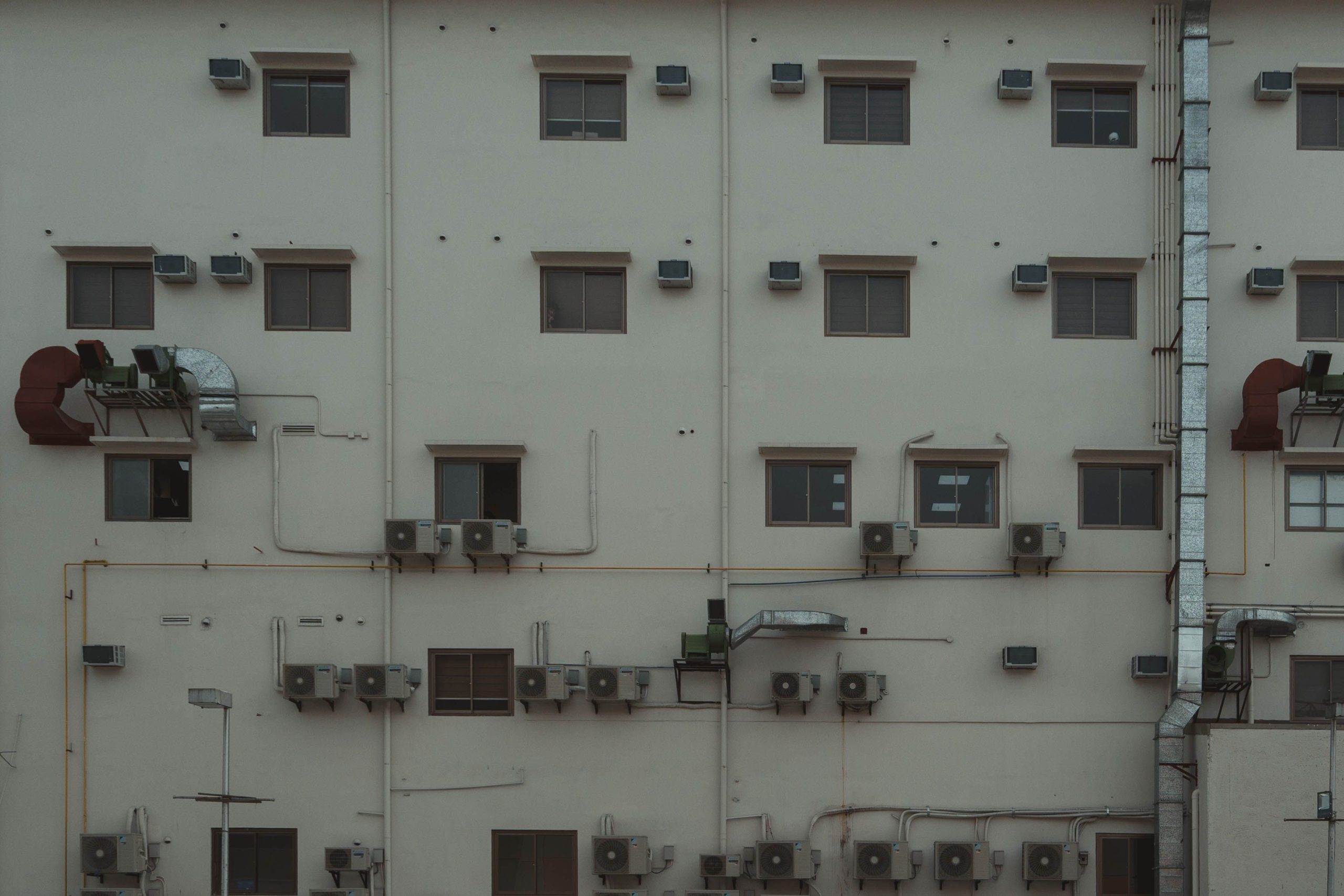
Property owners and managers can improve airflow long-term by treating it as a building performance issue, not just a maintenance complaint.
For HVAC systems for apartment buildings, this means looking beyond the equipment and measuring how air actually moves through the property.
The best results usually come from moving from complaint-based maintenance to performance-based maintenance: inspection, measurement, correction, and ongoing verification.
Instead of responding to each complaint as a separate issue, managers should look for patterns. Are complaints concentrated on one floor, one building wing, one stack of units, one side of the building, or after certain weather conditions?
Pattern recognition can reveal pressure problems, duct imbalance, shaft leakage, or ventilation failures that a single service call may miss.
A strong long-term plan starts with an airflow assessment. For apartment building HVAC systems, this may include checking how supply, return, exhaust, and make-up air interact across the entire property.
This may include measuring supply, return, exhaust, and make-up air; checking pressure differences between apartments and corridors; inspecting ductwork; reviewing HVAC design documents; checking duct leakage, filter condition, fan operation, and temperature differences across spaces; and identifying rooms, units, or floors with recurring complaints.
Without measurements, airflow work becomes guesswork.
Next, the building should be professionally balanced. Proper balancing is one of the most reliable ways to correct airflow problems when multiple units or floors report similar complaints.
Testing and balancing helps confirm whether each room, unit, branch, floor, and exhaust point is receiving or removing the intended amount of air.
Balancing dampers, fan speeds, controls, and ventilation settings may need adjustment. Many buildings have HVAC equipment that works, but the air is not distributed correctly.
Duct sealing and duct repair should also be priorities. Sealing ducts in apartment buildings can help keep conditioned air on the intended path and reduce comfort complaints.
Sealing leaks in supply, return, exhaust, and ventilation ducts helps keep air moving through the intended pathways. It can improve comfort, reduce energy waste, limit odor movement, reduce utility costs, and support better indoor air quality.
Repairing disconnected sections, insulating where needed, and correcting crushed or restricted runs can also produce noticeable improvements.
Managers should also maintain filters, coils, fans, belts, dampers, grilles, exhaust systems, shafts, make-up air units, blower wheels, and controls on a consistent schedule.
Dirty equipment reduces airflow, while stuck dampers, failing fans, or small maintenance failures can create building-wide imbalances.
Preventive maintenance is usually less expensive than repeated resident complaints and emergency service calls.
For older buildings, long-term improvement may require duct redesign, added return-air paths, upgraded ventilation or exhaust controls, better corridor pressurization, dedicated outdoor air systems, energy recovery ventilation, demand-controlled ventilation, or replacement of aging equipment.
These upgrades are common considerations when improving HVAC systems for apartment buildings that no longer match current occupancy, ventilation, or comfort needs.
In some cases, the building envelope also needs attention because excessive air leakage through shafts, stairwells, windows, and penetrations can overpower the HVAC design.
But bigger equipment should not be the first assumption. Oversized equipment can create short cycling, poor humidity control, noise, and comfort swings.
The most important step is to verify results. After repairs or upgrades, airflow should be measured again. Resident comfort should improve, odors should be reduced, rooms should condition more evenly, and the system should operate without excessive noise or pressure problems.
Document airflow readings, track complaints, inspect hidden pathways, seal leaks, balance systems, and verify results after repairs.
In apartment buildings, better airflow is not achieved by simply installing bigger equipment. Better air circulation in apartment buildings comes from designing, sealing, balancing, and maintaining the whole air distribution system.
It comes from designing, sealing, balancing, and maintaining the whole air distribution system. Buildings that do this tend to have fewer comfort complaints, better indoor air quality, lower energy waste, and more satisfied residents.