
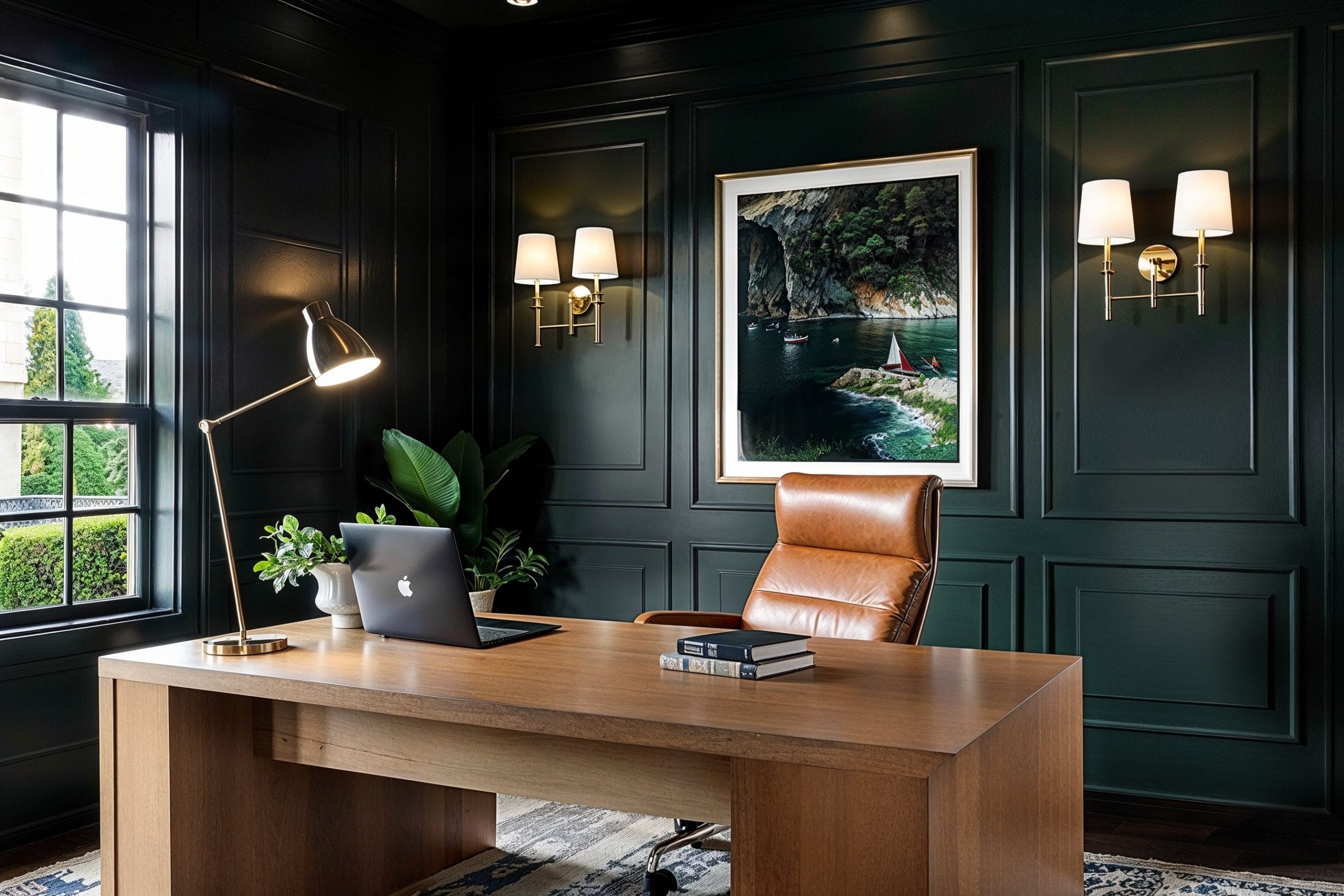
A modern man’s office doesn’t need to look like a tech startup exploded in a white box. Not everyone wants to sit surrounded by acrylic chairs and sad gray filing cabinets. If you’ve ever walked into a room and felt like the furniture actually had something to say—like it had lived a few lives before it got to you—you already get the appeal of antique design.
You’re not just decorating, you’re curating a space that feels lived-in, thought-out, and solid. The kind of place where you can think straight, get work done, or just sit in a leather chair doing absolutely nothing without feeling like you’ve wandered into a dentist’s waiting room.
If your vibe leans masculine, classic, and just a little dramatic in the best way, antique pieces can bring a whole different energy into your space. We’re talking about layers of texture, stories in the wood grain, patina in the metal, and actual personality. It’s about time the modern office got some character.
Lean Into Wood That’s Seen Some Stuff
Let’s start with the anchor of the room: the desk. You could buy a shiny new thing, sure. Or you could bring in a nineteenth-century oak roll-top that’s scuffed in all the right places, smells faintly of tobacco and history, and has secret drawers you’ll forget about until three years from now.
The good kind of forgettable. Old desks often come with quirks like leather writing surfaces, tiny keyholes, and sliding trays nobody really uses anymore, but they look amazing and feel even better when you’re working late with a strong drink and low lighting.
Dark-stained woods—mahogany, walnut, cherry—add a grounded feel without trying too hard. They give the whole space a sense of permanence. A big executive-style desk with claw feet and heavy brass hardware doesn’t need to be fancy to command the room.
Pair it with a club chair that has some weight to it. Leather that’s cracked a bit. Brass studs. Something that makes you feel like you could write a novel or call someone in for a very serious meeting. Even if you’re just checking emails.
Let the Walls Tell a Sea-Worthy Story
If there’s one way to stop your office from feeling like a sad beige box, it’s art. But skip the framed inspirational quotes or abstract prints pretending to be edgy. Instead, line the walls with marine paintings by Moret, Hawkins and others.
Big, moody scenes with crashing waves, stormy skies, and ships that look like they barely made it back to port. These pieces do more than just fill space. They pull you in. They bring movement, tension, and a little old-world mystery into the room.
Even if you’ve never set foot on a schooner, something about these works connects. Maybe it’s the chaos of the sea mirroring whatever your inbox looks like. Maybe it’s the sense that, no matter how rough the waters, someone’s steering the ship. Either way, you don’t just hang these pieces. You let them anchor the space.
You can build the rest of your decor around them, letting blues, browns, and deep greens carry through into your curtains, rugs, or even just a vintage glass inkwell on your desk. Suddenly, your office doesn’t just reflect your work—it reflects your mind. Thoughtful. Deep. Slightly mysterious.
Don’t Overlook the Lighting—It Changes Everything
Overhead lighting is the enemy. There, we said it. It flattens the room, makes your antique furniture look washed out, and kills any vibe you were going for. Swap that ceiling fan light for a vintage chandelier, even if it’s small. Something with wrought iron or tarnished brass and bulbs that cast a soft, warm glow.
Add a banker’s lamp with a green glass shade or a brass adjustable reading lamp on your desk. If it looks like it belongs in an old library or a detective movie, you’re doing it right.
Low lighting makes everything feel richer. Wood glows instead of just looking brown. Paintings come alive with depth and shadow. And you start to feel like you’re living in a space that was meant for thoughts, not tasks.
Build Around Storage That Doesn’t Look Like Storage
There’s nothing inspiring about a plastic filing cabinet that rattles every time you open it. But you still need somewhere to stash your papers, your notebooks, maybe even the tools of whatever strange side hobby you’ve picked up recently. That’s where old cabinetry and case goods come in.
Hunt down a campaign chest, an old apothecary cabinet, or even a beat-up sideboard with drawers for days. You can label them or not, but they look good just sitting there. That’s half the job done. Bookshelves are great too, especially when you mix leather-bound tomes with oddball finds like carved bookends, cigar boxes, or old binoculars you’ll never use but look fantastic.
And if you’ve got the space and the ambition, consider building in some custom cabinetry with antique fronts—maybe salvaged from old furniture or church panels. The result? A seamless look that feels built over time, even if you just had it installed last weekend.
Bring In the Oddities—The More Personal, the Better
This is where you get to have fun with it. The little pieces that make people pause. Maybe it’s a taxidermy crow, maybe it’s a vintage typewriter that still works. Maybe it’s an old globe with outdated borders or a brass telescope aimed dramatically at nothing. These aren’t decorations. They’re conversation starters. Or silence keepers, depending on the mood.
Antiques are funny like that. Some things just speak to you. A cast iron letter opener in the shape of a sword. A box of fountain pens. A faded photo in a silver frame. It doesn’t matter what it’s “worth.” What matters is it feels like it belongs there. Like it would be wrong not to include it.
You can mix in family heirlooms if you have them, or things that look like they could be. The point is to make it personal, layered, a little strange in the best way. That’s how you create a masculine office that feels like more than a workspace. It becomes your retreat. Your lab. Your library. Your slightly cluttered, deeply considered hideout.
Bringing It All Together
An antique-filled office doesn’t have to feel heavy or dusty or like you’re living in someone else’s past. When done right, it feels grounded, smart, and distinct—like the kind of place where ideas take root. You don’t need every piece to match. In fact, it’s better if they don’t. Let the space evolve the way a good collection does: slowly, with intention, and a little bit of obsession.
Throw in a leather chair, some aged wood, paintings that make you feel things, and lighting that sets the tone, and you’ve got more than an office. You’ve got a room with presence. A room that says something. Even when you’re not in it.